I first heard Rob Snyder on Lenny's Podcast (opens in a new tab), in an episode Lenny titled "An 86-minute guide to finding PMF." Rob wrote The Power of Pull (opens in a new tab) and writes The Physics of Startups (opens in a new tab). The episode put words to something I've personally experienced many times in my career.
The idea
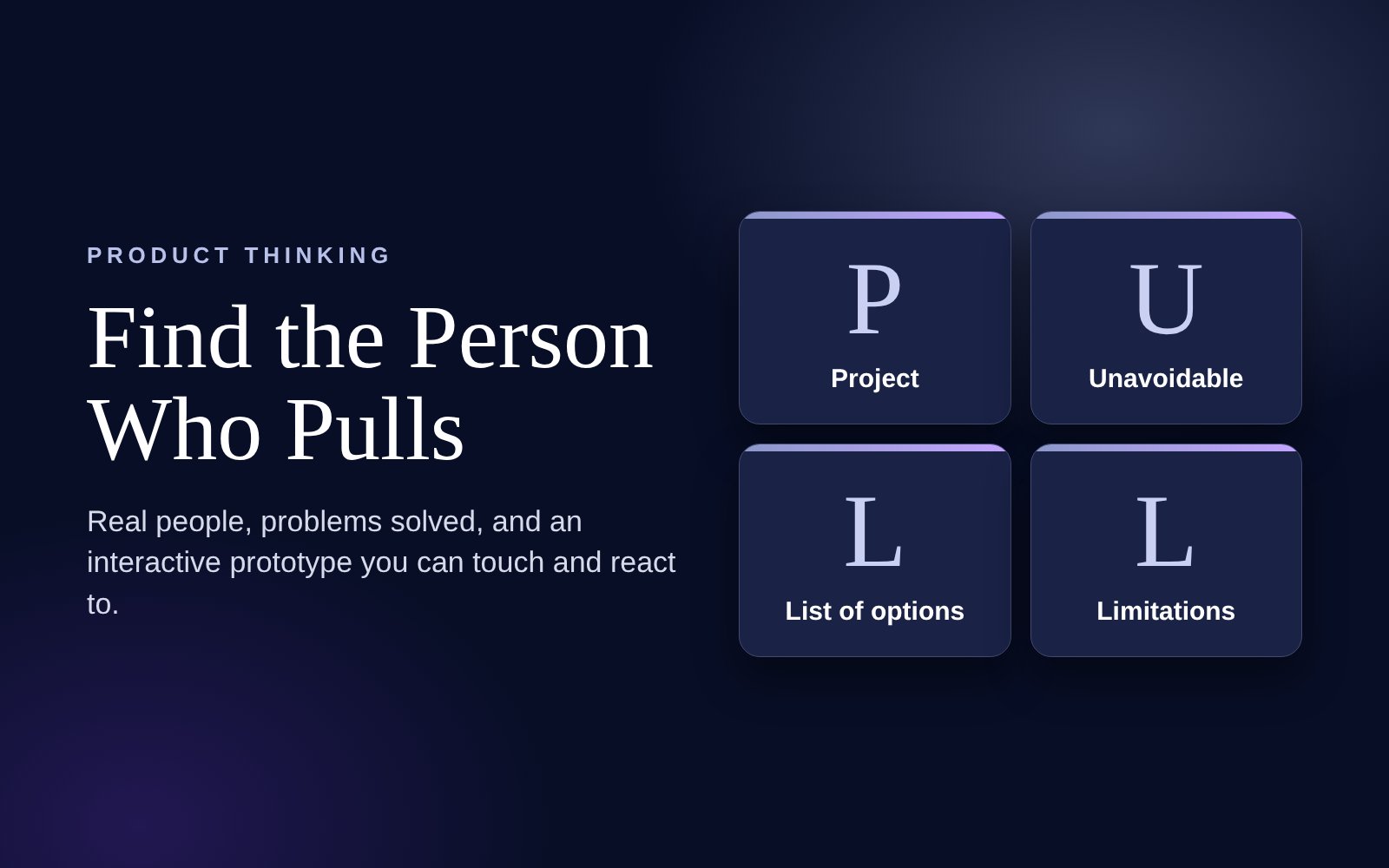
Rob's framework describes a customer who will "pull" your product out of your hands. PULL stands for:
Project
Something on their to-do list they are trying to get done.
Unavoidable
It has to happen now, not next quarter.
List of options
The ways they could get it done today: hire, do it themselves, or buy an existing tool.
Limitations
Why none of those options are good enough.
You need all four at once. Miss one and people complain about the problem but never buy the fix. This spoke to me:
One of the main mistakes people make is thinking that pull is a thing that a company has. It's a thing a person has.
Where I've experienced pull: 15,000 pages of medical records
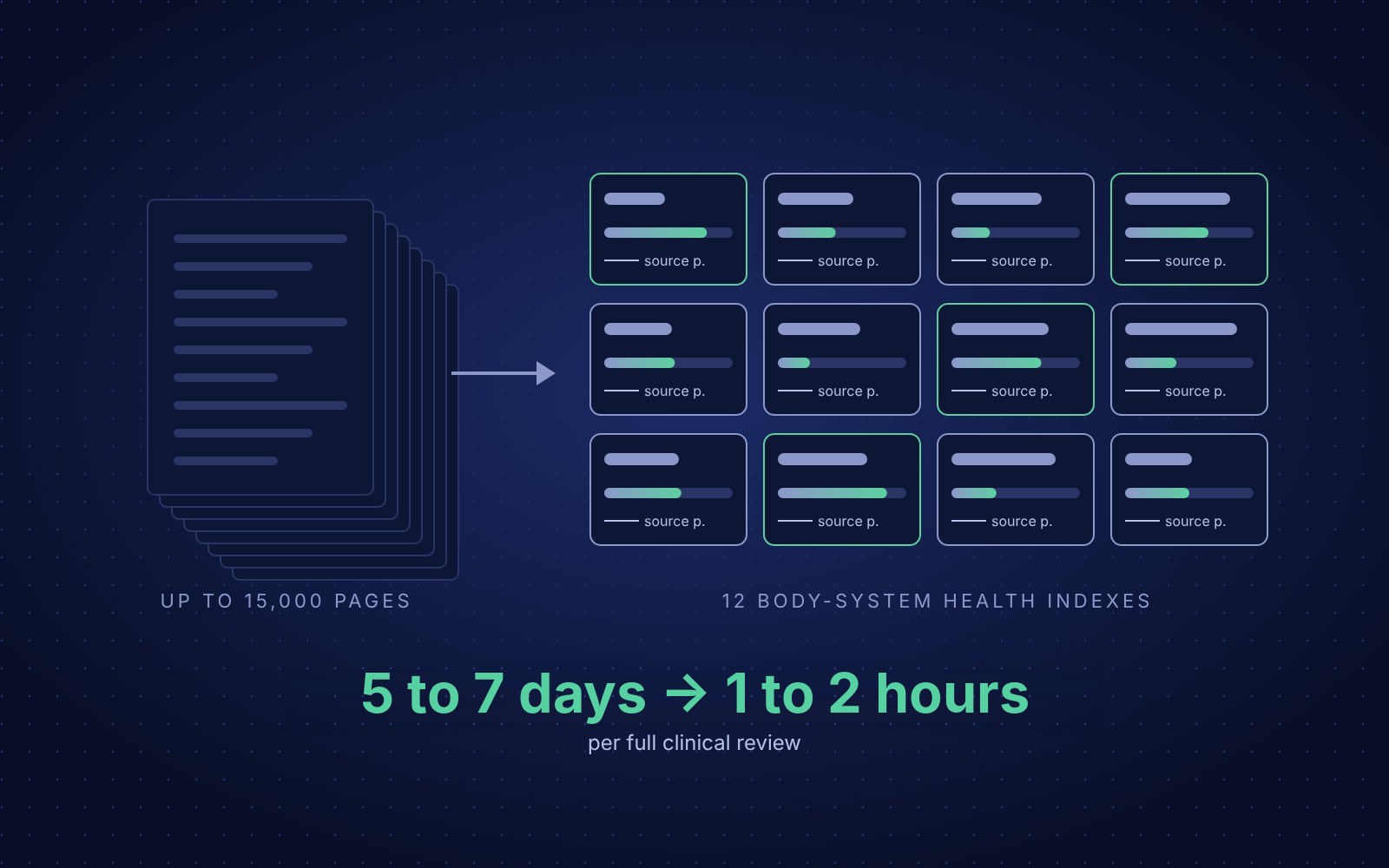
At Preston, the medical director and her clinical team had to review every medical record for every case to get a full clinical picture of a patient. That rule is non-negotiable for the business. A case could run up to 15,000 pages, with 20,000 to 25,000 medical data points, and a full review took 5 to 7 business days. The business expected a clinical answer in under 2 days. The clinicians worked a lot of overtime, and every large deal built a backlog that slowed the business down.
Here is how that maps to PULL:
Project
A complete, accurate clinical view of each case.
Unavoidable
Every record must be reviewed, and the business timeline is under 2 days.
List of options
Overtime and more reviewers, generic AI and OCR tools, and manual shortcuts like spreadsheets and skimming.
Limitations
People don't scale. Generic tools couldn't show the source page, so clinicians re-read everything anyway. Skimming breaks the review-everything rule. Nothing sorted findings the way she analyzed a patient's medical history.
I didn't create the pull. It was the pitch she made to our CEO when she joined, before I arrived. My job was to understand it, build structure around her vision, and ground it in the reality of what my team could deliver from a technical standpoint.
I started with a spreadsheet the data scientists had been working from. It had no structure that showed what she was trying to do. This was before I used AI tools, so I rebuilt it in Notion as a structure she could click through, and we worked it until she said it matched her vision. Then I sat with the clinicians and watched them do real reviews: what they looked for on each page, what they picked out, and how they used it in their clinical judgment. Lenny quoted Nan from Linear on this, and it describes the work exactly:
I want to feel the pain of the person the same way they feel the pain.
The result was the Clinical Health Summary Tool: one view across 12 body-system health indexes, with every critical piece of medical data linked to its source page. A full clinical case review went from 5 to 7 business days to 1 to 2 hours, and clinicians went from 3 to 4 cases a week to 3 to 6 cases a day. More important, they stopped wading through 15,000 pages and focused on what mattered: better clinical judgment derived from clarity around critical medical conditions and lab results.
Where there was no pull: a pilot nobody needed
I've also seen the opposite. At Preston we ran a healthcare pilot with four healthcare provider organizations. Our data science team built fall-risk models we were confident in, and the cost case was clear. Studies of older adults put roughly half or more of last-year-of-life spending in the final 3 months: about 51% in a US Medicare study (opens in a new tab), and 62.6% in a study of older cancer patients (opens in a new tab). Seniors with repeated serious falls are significantly more likely to end up in that end-of-life hospital visit where they never leave.
We had a working product. We could show who was at risk of a fall or an ER visit and who needed triage. But nobody pulled.
There was no person. There was just a large healthcare provider with thousands of competing projects. Nobody in the room had this on their own to-do list with a reason it had to happen now. We were pushing, trying to convince them they needed it.
We also had design partners, including a large technology partner, who told us it looked great and would clearly have value. But they weren't going to use it. The doctors and nurses who would use it were never in the room. Rob nails why that feedback is worth so little:
The people who actually have something really important they're trying to get done, they don't want to be a design partner.
I agree with him completely on design partners. They get to play Steve Jobs for an hour, and you get feedback that never turns into a purchase.
Where I'd change Rob's playbook
Rob tests pull with two slides. The first says, in effect, "here is what I hear you're stuck on." The second gives a conceptual overview of how you might help. I'd build on that first slide and replace the second with an interactive prototype.
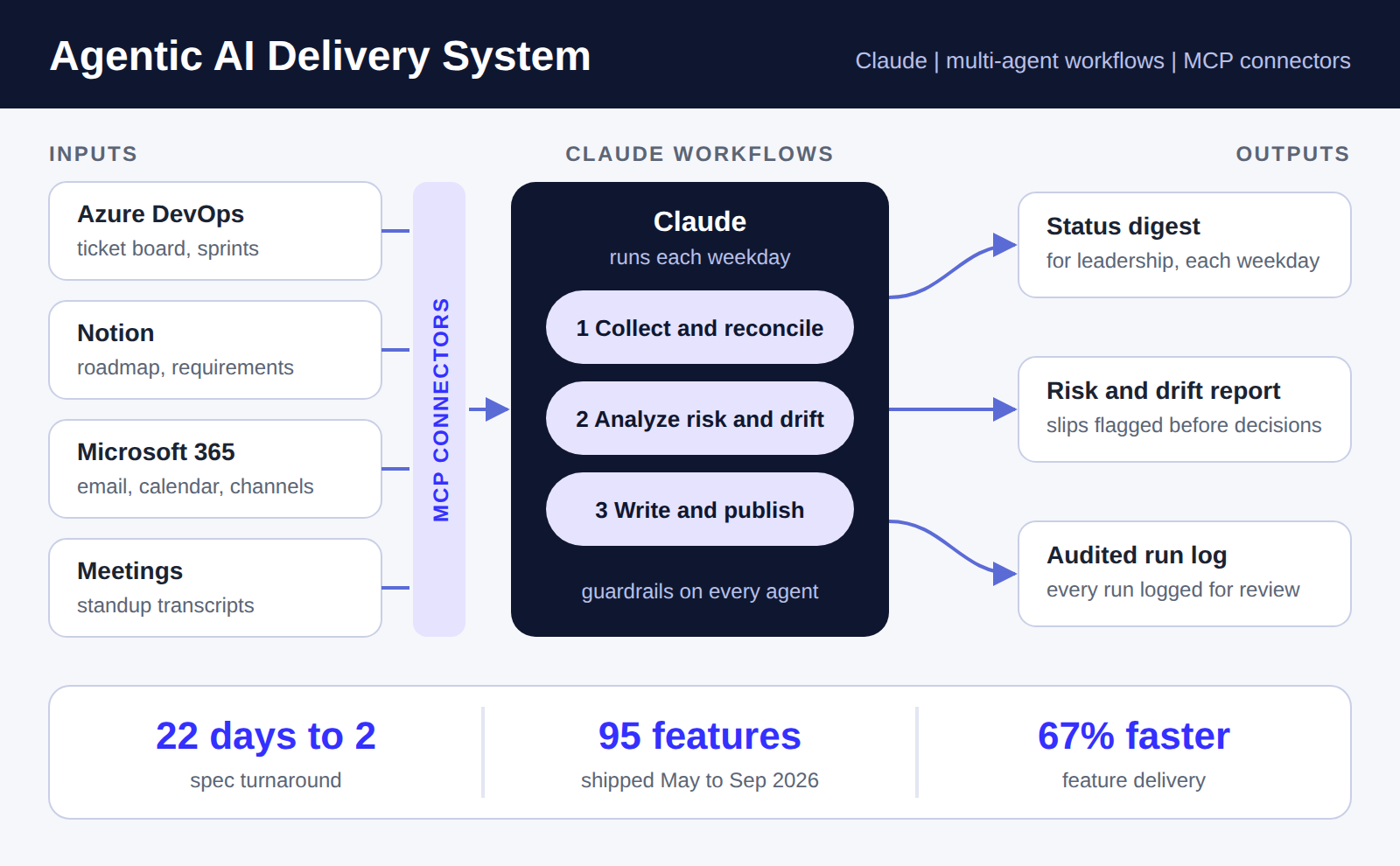
People know they have a pain point, and they have a story around it. But until they can touch something, the conversation stays abstract. When they click through a working prototype, the answer comes fast. Either "yes, that's exactly what I need," or "that's close, but here's what you're not showing me." You add what's missing, show it again, and within a week you have the thing they actually need. With AI tools, that prototype takes days, not months. It's how I work now: my Claude prototypes go to engineering as tested requirements, and that made feature delivery 3x faster.
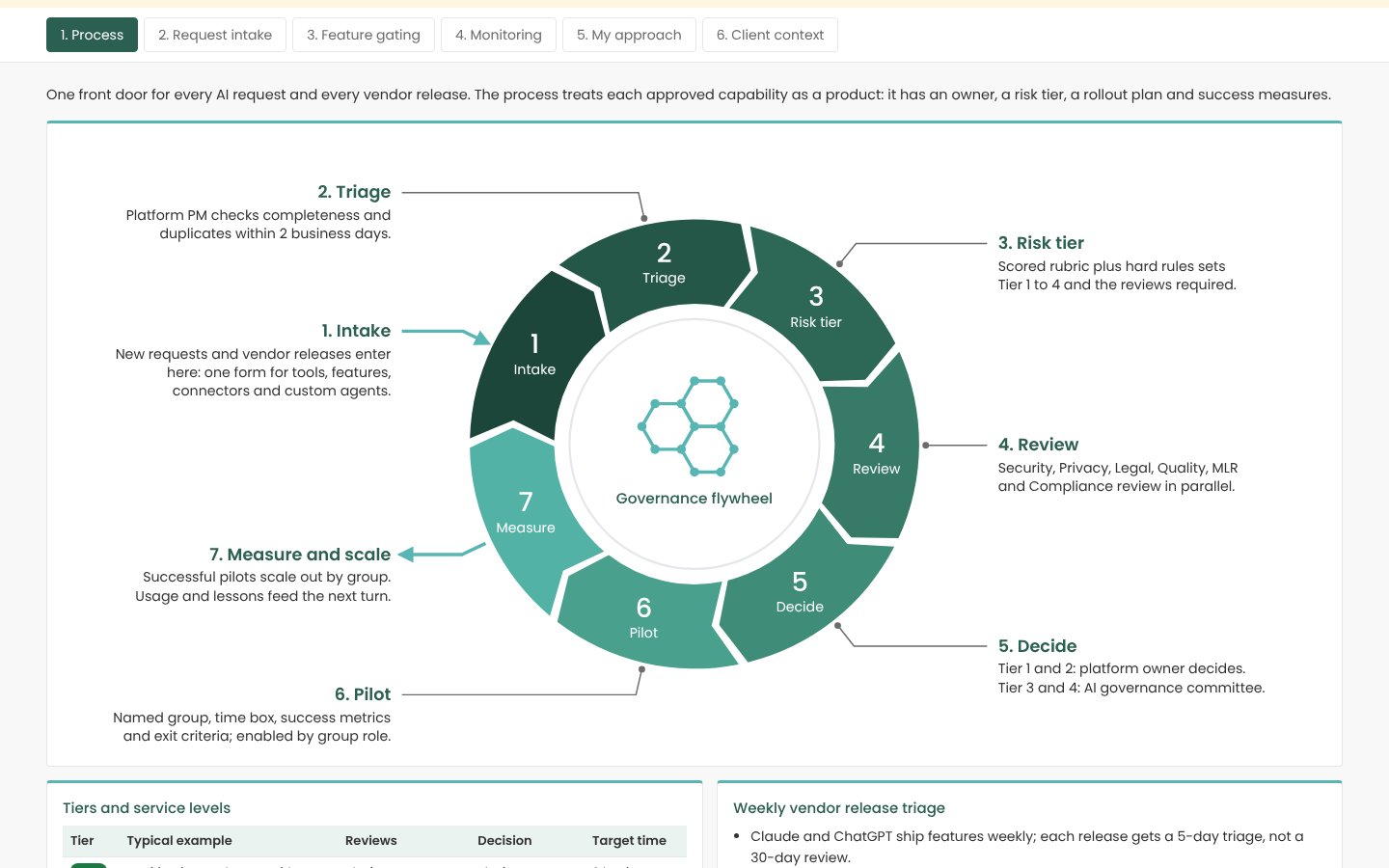
On pilots, I land close to Rob, with one difference in wording. A pilot that comes after someone says yes is just the first release, the MVP. A pilot offered to someone who hasn't said yes is a way to waste time and effort before finding out there's no pull. My healthcare pilot proves the point: a pilot can't create pull that isn't there. In regulated work like healthcare or defense, a formal pilot or validation step is sometimes required. Run it after the yes, never in place of it. The same logic runs through the AI request intake and feature gating process I designed: each AI request pilots with a named group before it scales by role.
The Hail Mary that became the most-used feature
When Rob doesn't find pull, he asks what he calls the Hail Mary question:
Is there anything on your to-do list that you would pay me to do right now?
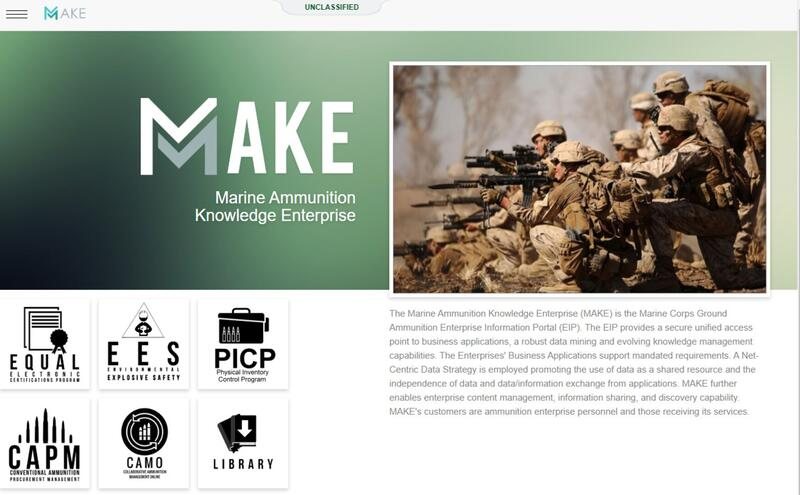
I've seen a version of this work even when the main product already had pull. In the Navy, my team built MAKE, the Marine Corps explosive safety enterprise system: safety certifications, an inspection portal, and the final report for the base captain. During those conversations, leadership kept coming back to one gap. Inspectors were identifying Marines who didn't know how to pack and unpack specific explosive ordnance correctly. The training lived on CDs. A Marine had to find the CD, find a computer, unzip the file for their specific ordnance, and read an HTML tutorial. It was slow, easy to get wrong, and impossible to update.
So we asked: you have this training gap, and we're already putting your safety work in our enterprise system. Will you let us solve this too?
It turned out they already had a vendor producing training videos for exactly this ordnance. They just had no way to get them in front of Marines. We pulled the videos into MAKE, linked them to the matching certifications, and added dynamic search capabilities. Any Marine could log in and watch the right video in real time. It was YouTube for explosive safety, and it was an easy win: video files and basic search.
It became the most-used part of the system for the entire Marine Corps, and the feature PM AMMO leadership pointed to when they talked about the project's success. It came from one side conversation, which is Rob's point about where good ideas come from:
These things don't really emerge from a whiteboard.
After the yes: when they would never go back
Rob says every customer will churn until they reach a point where it would be weird to leave. With the Clinical Health Summary Tool, the first one-hour reviews, trusting the source links, and the backlog clearing on large deals all came together. But the moment I knew it was permanent came later.
Clinicians started finding incorrect data in the tool. We traced it to our digitization vendor, who was incorrectly categorizing important and critical data as part of their process. The tool made the error visible for the first time. The medical director thanked me for uncovering it so it could be fixed at the source. The same bad data had been feeding the data science models downstream and hurting their predictions.
At that point the tool stopped being a time-saver. It was how the business knew their data was accurate.
Taste and pull
My product ethos is that product requires good taste. AI can generate almost anything, but it still takes a person to see that a screen is too busy, that a button doesn't sit in the right place, or that a pattern from past work belongs here, so that a new user landing on the page knows exactly what to do.
Taste doesn't create pull. The person has to be stuck before you show up. But poor taste can hide pull completely. Show someone with real pull a confusing product, with too many features, navigation everywhere, buttons all over the place, and colors that clash, and they can't picture themselves using it. They won't pull on something they can't understand. Good taste lets the solution jump off the screen, so the person who is stuck sees their way out in seconds.
Notion is the example I keep coming back to. It lets you build pages and databases on the fly without ever explaining that you're building a database. It gets out of your way so you can solve the problem in front of you.
Rob makes the other half of this point with his own story of trying better UX in HR software: the buyers didn't care, because better design wasn't relevant to anything they were stuck on. Taste pays off only where pull already exists.
How I use PULL now
Before I build anything, I want answers to these:
- Who is the specific person, by name and role, not the company?
- What project is on their list right now, and why can't it wait?
- What have they tried, and why isn't it good enough?
- Have I sat with them while they do the work?
- Can I put a clickable prototype in front of them within a week?
- Did they try to buy, or did they just say "interesting"?
- If there's no pull, what would they pay me to take off their plate?
- After launch, what's the moment they would never go back?
References
Where I first heard this and the source material.
- Lenny Rachitsky, "An 86-minute guide to finding PMF | Rob Snyder" (opens in a new tab) Lenny's Podcast
- An 86-minute guide to finding PMF (video) (opens in a new tab) YouTube
- The Power of Pull, Rob Snyder (opens in a new tab) Hachette Book Group
- The Physics of Startups, Rob Snyder's newsletter (opens in a new tab) Substack
- The PULL Quickstart Guide (opens in a new tab) The Physics of Startups
- Medical Expenditures during the Last Year of Life (Hoover et al., 1992 to 1996 MCBS data) (opens in a new tab) Health Services Research
- Medical care costs at the end of life among older adults with cancer (Jo, Lee and Kim) (opens in a new tab) BMC Palliative Care, 2023
Case studies in this article
The work behind the stories above.