The challenge
When I joined Preston in June 2023, six teams, 26 people across development, data science, QA, and a contract agency, were building one AI/ML and data platform, but not as one team.
Development and data science were at odds. The developers were senior and strong; what they lacked was a shared agile process and sprints aligned with data science. There was no shared API contract or handoff, so each side built to its own assumptions, and integration problems surfaced at the 11th hour.
There was no common definition of done. Work was called done before it reached production or had QA and business sign-off, so leadership heard done when the business still could not use it.
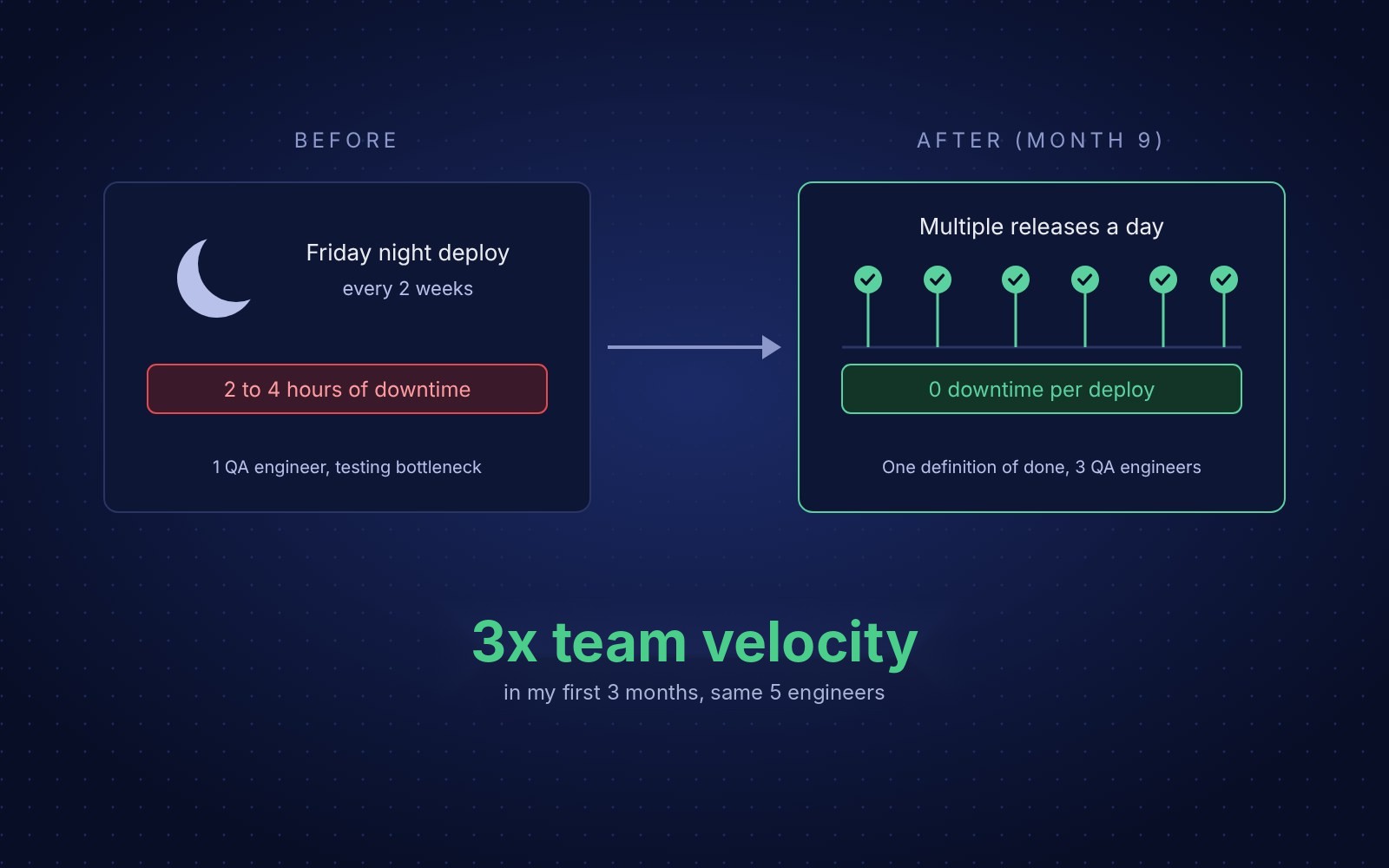
Releases went out every two weeks in big batches, with one QA engineer as the bottleneck. Each deploy took 2 to 4 hours and took the whole system down, so it ran on Friday nights after business hours, often past 9 PM. Integration issues that testing missed showed up in those late deploys, and several times we had to back out a release.
The ticket board existed, but no one agreed on what a story or a defect was, and the roadmap was one line per goal with no dates.
Each team also reported separately, so no one could see when a capability was actually live.
My role
As the product manager for the platform, I owned the requirements, the roadmap, and how work moved from idea to production across all six teams.
I baselined delivery metrics from my June 2023 start, so every change we made could be measured instead of argued.
How I solved it
- 1
Write one contract
I wrote the API requirements in Notion with Swagger specs, so development and data science agreed on the interface before either side built.
- 2
Define done once, for everyone
Done means in production, signed off by QA, and signed off by the business, for every team. A key decision: it made status honest, because nothing counted until a user could use it. Business sign-off meant walking the business through a checklist of what they asked for at kickoff, plus every change added along the way, until they agreed it was done.
- 3
Measure delivery, not opinions
I set up DORA metrics in LinearB and Azure DevOps, ran daily standups, and replaced separate team updates with one combined leadership briefing on what was live. I also started a bi-weekly lunch and learn so the teams could show each other what they had built and learned. Later I moved development and data science into one joint standup, so a broken handoff became a 5-minute call the same day instead of a surprise two weeks later.
- 4
Invest in QA
The other key decision: I grew QA from 1 engineer to 3, so testing kept pace with development instead of gating every release.
- 5
Fix the release process
We shored up CI/CD with engineering best practices, so a deploy no longer meant 2 to 4 hours of downtime on a Friday night. About 9 months in, we moved to multiple releases a day with no downtime, each change small, tested, and easy to roll back.
Results
- Team velocity rose from 40 to 125 story points a sprint (3x) within my first 3 months, with the same 5 engineers, and held at 125 for the rest of my time at Preston, including through engineer turnover once new hires ramped up. Measured in Azure DevOps and LinearB against a June 2023 baseline.
- By about 9 months in, releases moved from every two weeks, with 2 to 4 hours of Friday-night downtime, to multiple releases a day with no downtime. QA grew from 1 engineer to 3.
- Development and data science built to one API contract, and leadership saw one view of what was live.
- What I learned: a shared definition of done builds trust, small batches cut risk, QA is a multiplier rather than a cost, and a clear contract ends the friction between teams. The goal is to get a team out of hero mode: establish repeatable processes a new person can pick up, so delivery does not depend on people working nights and weekends.
References
Industry standards and guidance relevant to this work.
- Software delivery performance metrics (opens in a new tab)DORA, Google Cloud
- The Scrum Guide (opens in a new tab)Scrum.org and Scrum Inc.