What this approval means
Before any Defense Department system can go live, a senior DoD official has to formally accept its security risk. That sign-off is called an Authority to Operate. Without it, the system does not run.
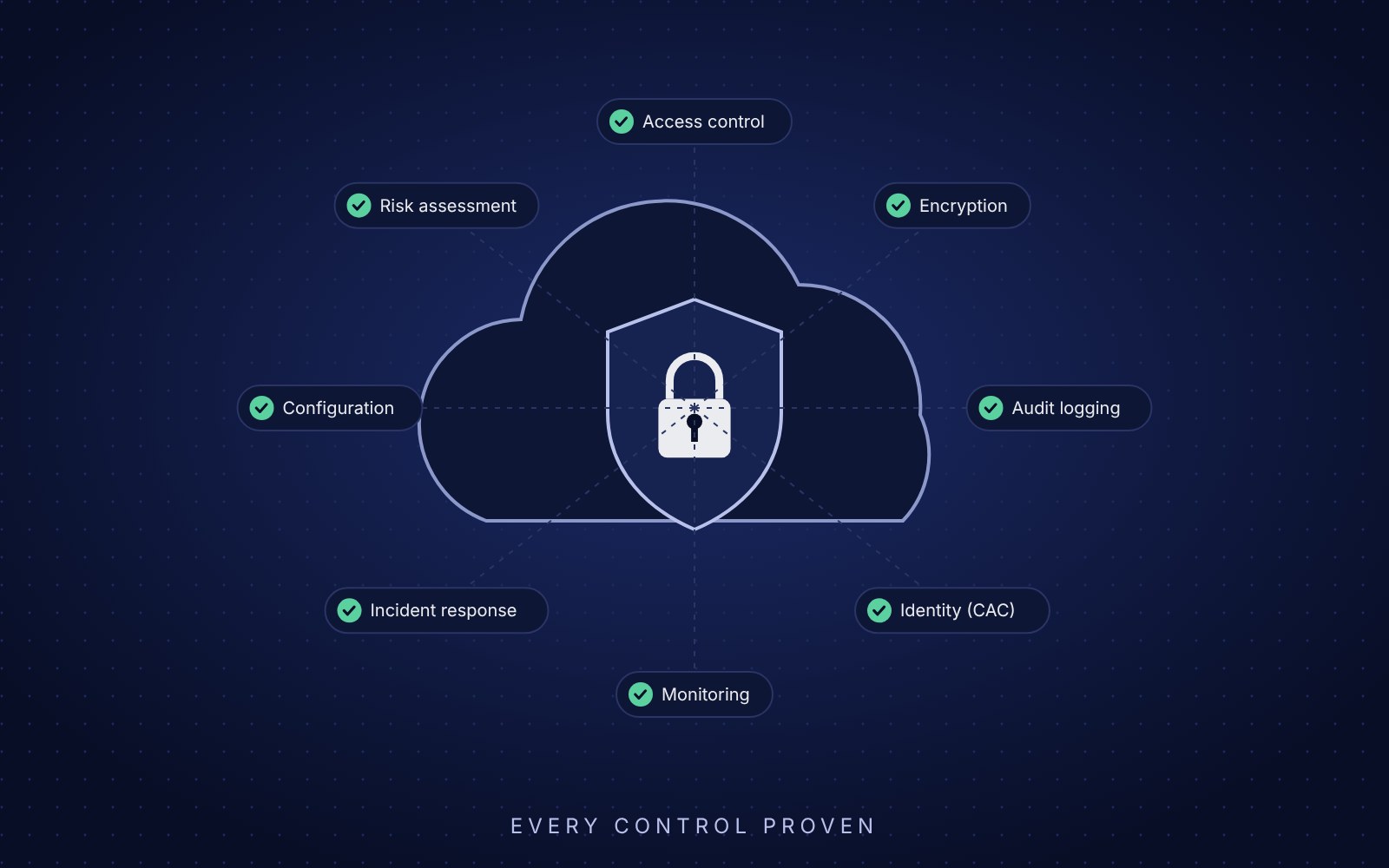
Our systems held Controlled Unclassified Information (CUI): sensitive government data that is not classified but must be protected by law and policy. For CUI in a commercial cloud, the DoD requires Impact Level 4 (IL4), which takes the federal cloud security baseline and adds defense-specific controls on top.
In plain terms, we had to prove, one security control at a time, that our cloud system protected that data as well as, or better than, servers locked inside a government building.
The challenge
- No playbook. No Navy or Marine Corps system had been approved to run in Azure Government at IL4. Every reviewer was seeing this for the first time.
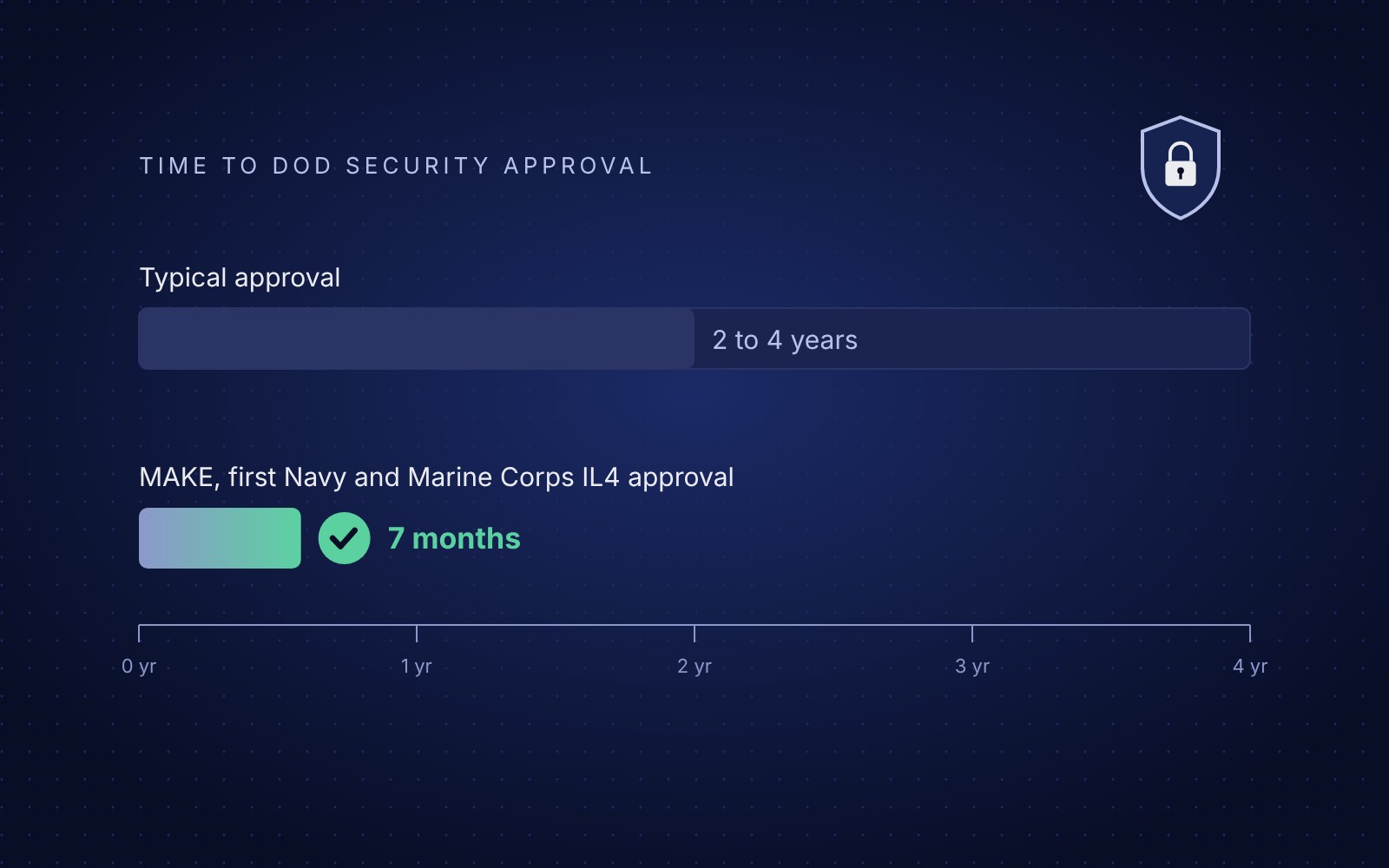
- Slow and expensive by default. A typical approval takes 2 to 4 years and a large budget for documentation, testing, and repeated review cycles.
- No time to spare. I took over MAKE, the Marine Corps ammunition and explosives safety system that tracks 1.2 billion pieces of ammunition, with the team 6 months behind and nothing shipped. Marines in the field could not wait years for the new system.
My role
As principal program manager in the cybersecurity division at NSWC Corona, I led a 20+ person team and owned the approval end to end. We followed the NIST Risk Management Framework, the process the DoD requires for every system (NIST SP 800-37, with security controls from NIST SP 800-53).
I worked directly with the security officers who review the evidence and recommend approval (the ISSM and ISSO), and I owned the cloud certification and deployment in Azure Government.
How I solved it
- 1
Build security in from day one
We designed and built the system from the ground up with security in mind, so the controls were part of the architecture, not added at the end. That included CAC smart-card single sign-on, the military ID card login, and Splunk event monitoring.
- 2
Partner with the reviewers every week
I held weekly check-ins with the security officers and worked through every roadblock with them as it came up. They knew what was coming before it reached their desk, and nothing sat in a queue.
- 3
Build first, then document
The hardest part was not technical. It was getting the documentation exactly right. So we flipped the order: put the right technology in place and write the code to meet each critical control first, then document what was already true.
- 4
Have the evidence ready before it is asked for
We prepared documentation ahead of each approval step and treated security work as part of the product backlog, alongside features. Engineers owned the security hardening of their own application and servers.
- 5
Reuse the approval for the next system
For SMSMDS, the Navy's STANDARD Missile life cycle data system ($10B+ in missile assets), we reused MAKE's already approved front end and login. That shortened both the build and the security review for the second system.
Results
- MAKE earned its approval ahead of schedule, with every required NIST security control satisfied.
- Commendation from the Marine Corps Program Manager for Ammunition (October 2019) citing the team's CI/CD, cloud development, and DevSecOps work.
- My team wrote a white paper on how we earned the approval ahead of schedule, shared with the other DoD branches as a guide.
- SMSMDS, funded by the US Navy, NATO, Japan, and Australia, moved into IL4 in under a year with all four sponsors still funding it.
- What I learned: treat security as product work, build trust with reviewers early, build the controls before writing about them, and reuse approved work so each approval is faster than the last.
Tools and stack
- Azure Government (IL4)
- NIST RMF / SP 800-37
- NIST SP 800-53 controls
- DISA STIGs
- CAC smart-card SSO
- Splunk
- Azure DevOps
- TeamCity
- GitHub
- JIRA
- Confluence
References
Industry standards and guidance relevant to this work.
- Cloud Computing Security Requirements Guide (IL2 to IL6) (opens in a new tab)DISA, DoD Cyber Exchange
- DoDI 8510.01, Risk Management Framework for DoD Systems (opens in a new tab)Department of Defense
- Risk Management Framework (SP 800-37) (opens in a new tab)NIST
- SP 800-53 Rev. 5, Security and Privacy Controls (opens in a new tab)NIST
- FedRAMP cloud authorization program (opens in a new tab)GSA, FedRAMP.gov